

CONCRETE DUMPSTER RENTAL
Heavy debris has its own rules.
Concrete, block, brick, tile and dirt are dense enough that they need a dedicated container and a clean load. Get it right and it's recyclable as aggregate instead of buried, get it wrong and the truck legally can't lift it.
- Same-Day Service
- 5.0 · 300+ Reviews
- No Hidden Fees
Transparent pricing
What size dumpster for concrete & heavy debris?
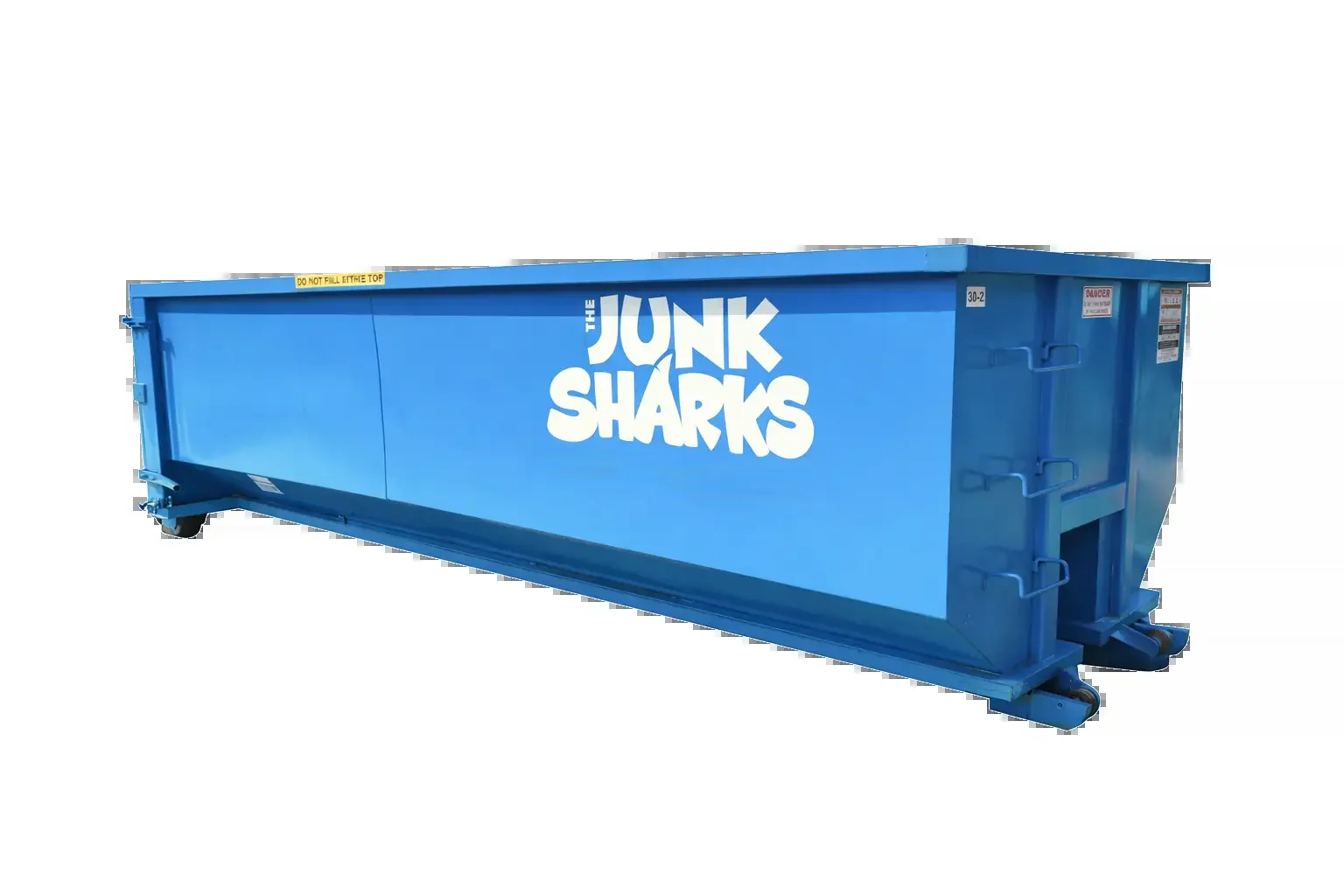
Most concrete & heavy debris jobs in Ocala run a 10 yard, it's pre-selected below. Tap any size to compare, the container morphs to scale, with real dimensions and flat-rate pricing.
10 ft long · 8 ft wide · 4.5 ft tall
10 Yard Dumpster
$349flat rate
- Disposal included
- 1 tonC&D Tonnage Exceptions
- Holds about
- 3 pickup loads
- Footprint
- 10 × 8 ft
- Rental period
- 10 days
Bathroom remodels, single-room cleanouts, concrete & dirt
| Size | Dimensions (L×W×H) | Tons included | Holds about | Flat rate | Best for | Book |
|---|---|---|---|---|---|---|
| 10 Yard Dumpster | 10 × 8 × 4.5 ft | 1 ton | ~3 pickup loads | $349 | Bathroom remodels, single-room cleanouts, concrete & dirt | Book |
| 15 Yard Dumpster | 20 × 8 × 3 ft | 1.5 tons | ~4 pickup loads | $425 | Garage or shed cleanouts, flooring tear-outs, landscaping | Book |
| 20 Yard DumpsterMost booked | 20 × 8 × 4.5 ft | 2 tons | ~6 pickup loads | $449 | Whole-room renovations, roofing, mid-size estate cleanouts | Book |
| 30 Yard Dumpster | 20 × 8 × 6 ft | 3 tons | ~9 pickup loads | $549 | New construction, large remodels, property cleanouts | Book |
| 40 Yard Dumpster | 22 × 8 × 8 ft | 4 tons | ~12 pickup loads | $695 | Major demolition, commercial jobs, multi-room builds | Book |
Concrete & Heavy Debris Dumpster Rental in Ocala
Concrete is the one material where the usual dumpster advice stops applying. Everything else you'd throw away is limited by how much room it takes up. Concrete is limited by what a truck can legally carry down the road, and that limit arrives far sooner than most people expect, which is why heavy debris gets its own container, its own rules and its own page.
Why It Has to Be a 10 Yard
A cubic yard of broken concrete weighs roughly 2 tons. That single fact governs everything else. A 10 yard dumpster container filled with concrete is already at the edge of what our trucks and Florida road limits allow, and a larger box filled the same way simply cannot be picked up, not "we'd rather not", but physically and legally cannot. Anyone who offers you a 30 yard for a driveway tear-out is either planning to have you fill it a fifth of the way or hasn't thought it through.
So the honest answer for heavy debris is always the smallest can, and often more than one of them. A typical two-car driveway tear-out runs two to three 10 yards depending on slab thickness. We'd rather tell you that up front than have a driver arrive at a container nobody can move.
Keep the Load Clean and It Gets Recycled
This is the part worth planning for. Concrete, block and brick that arrive clean (no wood, no trash, no rebar tangles, no plastic sheeting) can be crushed and recycled as aggregate for road base and new construction rather than buried in a landfill. Mixed loads can't; once there's framing lumber and packaging in with the concrete, the whole container is general waste. If you're doing a demolition that produces both, separating them into two containers usually costs about the same as one mixed can and diverts a genuine amount of material.
What Counts as Heavy Debris
Poured concrete and slab sections. Concrete block, brick and paver. Ceramic and porcelain tile with mortar attached. Terrazzo, common in Central Florida homes built through the 1960s and 70s. Dirt, sand, sod and paver base. Asphalt millings and chunks. Stone and rock. Seawall panels and dock footings, which we see constantly on the Crystal River and Leesburg waterfronts. If you can lift a fist-sized piece and it feels heavier than it looks, treat it as heavy debris.
Placement for a Concrete Job
Two things matter more than usual. First, the ground under the container: a can loaded with concrete is the heaviest thing that will ever sit on your driveway, so we place on boards and we'll steer away from soft ground, septic fields and anything with a hollow underneath. Second, the walk: you'll be moving wheelbarrow loads, so the shorter and flatter the route from the demolition to the container, the better your back will feel about the whole project. Tell us where the work is and we'll set the can accordingly.
What Can't Go In
No wood, drywall, roofing or general trash if you want the load recycled. Never any hazardous material, paint, solvents, oils, batteries, tires. And a specific caution for older Florida properties: asbestos was used in some pre-1980s tile, mastic and pipe products, and it cannot go in a dumpster under any circumstances. If a pre-1980 floor or pipe wrap is coming out, have it tested before demolition rather than after.
Compare Every Size
See all five drawn to scale with real dimensions and flat rates: 10 yard dumpster · 15 yard dumpster · 20 yard dumpster · 30 yard dumpster · 40 yard dumpster, or read the dumpster size guide.
Book It in About 60 Seconds
Call or text (352) 581-2576 or schedule online and pick your delivery day. Same-day and next-day drops across Ocala, Marion County and Central Florida. Not sure it's a dumpster job at all? Our hauling crew does the loading for you, and the comparison guide runs both options side by side.
Questions
Dumpster Rental FAQs
Straight answers on cost, delivery and what fits. Still stuck? Call (352) 581-2576.
Rent a DumpsterWhat size dumpster do I need for concrete?
A 10 yard, essentially always. A cubic yard of broken concrete weighs about 2 tons, so a 10 yard filled with it is already at the legal limit for what a truck can lift and carry. Larger containers filled with concrete cannot be picked up at all.
How much concrete fits in a 10 yard dumpster?
Think in weight rather than volume. A 10 yard holds roughly the amount of concrete a truck can legally move, for planning, a typical two-car driveway tear-out runs two to three 10 yards depending on slab thickness. We'll size it with you before you book.
Can I mix concrete with other debris?
You can, but you lose the recycling. Clean concrete, block and brick get crushed into aggregate for road base; once wood, trash or plastic is mixed in, the whole load becomes general waste. On a mixed demolition, two containers usually costs about the same and diverts far more.
Is dirt considered heavy debris?
Yes, dirt, sand, sod and paver base all count and belong in a 10 yard. They're deceptively heavy, especially wet, and a larger container filled with soil hits the same legal limit as concrete.
Can I put a broken-up driveway or patio in a dumpster?
Yes, in a 10 yard. Keep it clean of wood, rebar tangles and trash where you can and it's usually recyclable as aggregate rather than landfilled.
What about tile and terrazzo from an older Florida home?
Both are heavy debris and belong in a 10 yard. One caution: pre-1980s tile, mastic and pipe wrap can contain asbestos, which cannot go in a dumpster and needs licensed abatement. If the home is that era, have it tested before demolition.

Coverage
Serving Ocala & All of Central Florida
Driveway-safe delivery across Ocala, Marion County and the surrounding communities.
Dumpster Rental Without the Runaround!
Flat-rate quotes · Same-day service · 300+ five-star reviews