

ROOFING DUMPSTER RENTAL IN OCALA, FL
Sized by weight, not guesswork.
Shingles are the densest thing most homeowners ever throw away. We'll size the can by your roof's actual squares and layers, drop it where it protects your driveway, and swap it fast if the tear-off runs long.
- Same-Day Service
- 5.0 · 300+ Reviews
- No Hidden Fees
Transparent pricing
What size dumpster for roofing?
Most roofing jobs in Ocala run a 20 yard, it's pre-selected below. Tap any size to compare, the container morphs to scale, with real dimensions and flat-rate pricing.
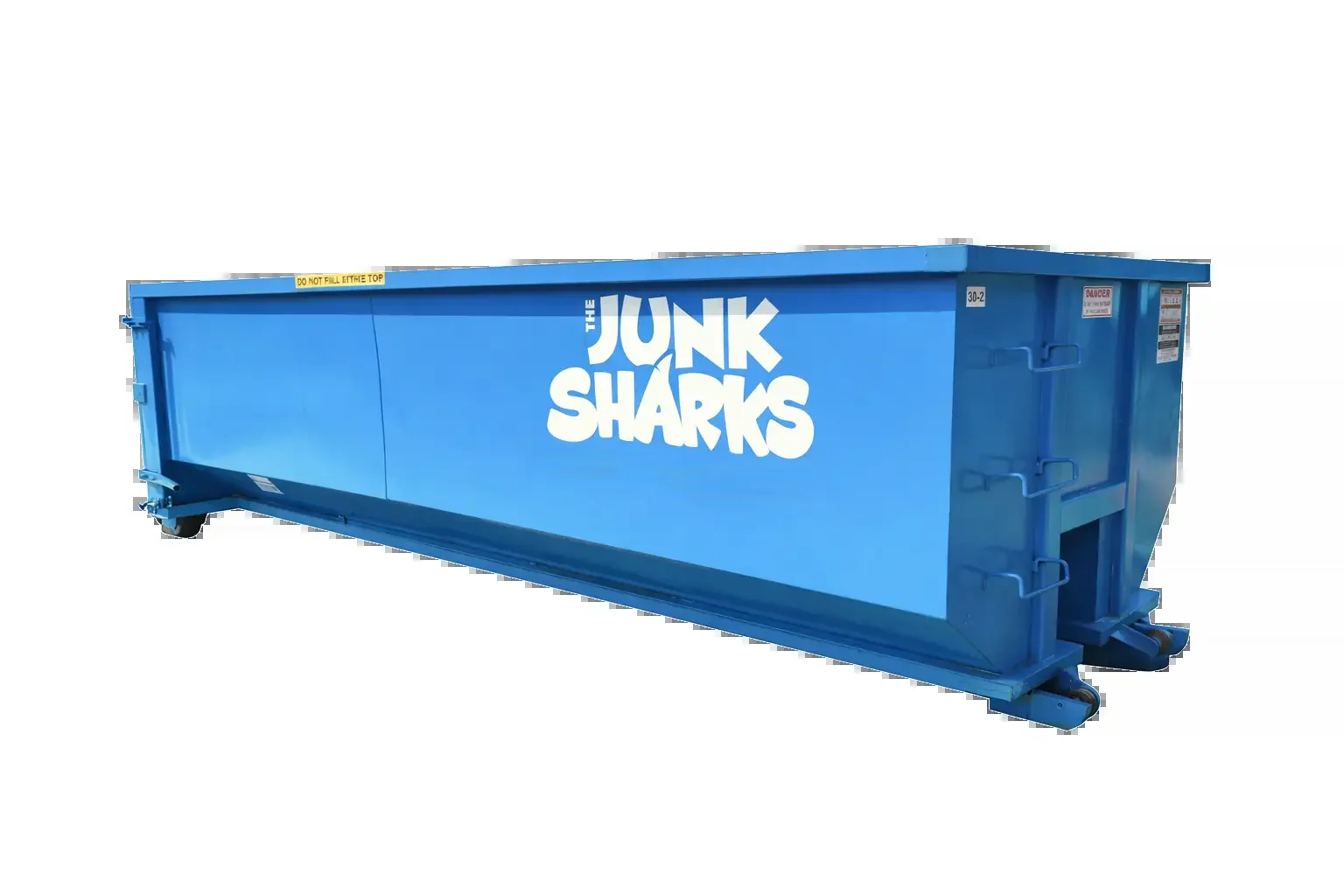
20 ft long · 8 ft wide · 4.5 ft tall
20 Yard Dumpster
$449flat rate
- Disposal included
- 2 tonsC&D Tonnage Exceptions
- Holds about
- 6 pickup loads
- Footprint
- 20 × 8 ft
- Rental period
- 10 days
Whole-room renovations, roofing, mid-size estate cleanouts
| Size | Dimensions (L×W×H) | Tons included | Holds about | Flat rate | Best for | Book |
|---|---|---|---|---|---|---|
| 10 Yard Dumpster | 10 × 8 × 4.5 ft | 1 ton | ~3 pickup loads | $349 | Bathroom remodels, single-room cleanouts, concrete & dirt | Book |
| 15 Yard Dumpster | 20 × 8 × 3 ft | 1.5 tons | ~4 pickup loads | $425 | Garage or shed cleanouts, flooring tear-outs, landscaping | Book |
| 20 Yard DumpsterMost booked | 20 × 8 × 4.5 ft | 2 tons | ~6 pickup loads | $449 | Whole-room renovations, roofing, mid-size estate cleanouts | Book |
| 30 Yard Dumpster | 20 × 8 × 6 ft | 3 tons | ~9 pickup loads | $549 | New construction, large remodels, property cleanouts | Book |
| 40 Yard Dumpster | 22 × 8 × 8 ft | 4 tons | ~12 pickup loads | $695 | Major demolition, commercial jobs, multi-room builds | Book |
Roofing Dumpster Rental in Ocala & Central Florida
A roof tear-off is the one job where picking a dumpster by eye goes wrong most often. Shingles look manageable in a pile and then weigh more than everything else you'd normally throw away combined. Get the size right and the job runs clean; get it wrong and you're either paying for airspace you can't legally fill or watching a driver refuse an overloaded container. This page exists to get you the right can the first time.
Work Out the Weight Before You Book
Roofers measure in squares, one square is 100 square feet of roof surface. A single layer of standard three-tab asphalt shingle runs roughly 225 to 250 pounds per square. Architectural or dimensional shingles run heavier, around 350 to 400 pounds. So a common 20-square Ocala roof with one layer of three-tab is about 2.5 tons; the same roof in architectural shingle is closer to 4 tons. If there are two layers (and on older Marion County homes there frequently are) double it.
That math is why a 20 yard is the standard roofing container rather than something bigger. Its 2-ton allowance covers a small-to-average single-layer tear-off, and when the roof is larger or double-layered we swap it rather than putting you in a 30 or 40 you'd only fill a third of before hitting the weight limit. A swap is genuinely cheaper than an oversized can in this situation, and it's the honest recommendation even though the bigger can carries a bigger sticker price.
Tile, Metal and Flat Roofs Are Different Again
Concrete and clay tile are heavier than any asphalt product (often 600 to 1,000 pounds per square) so a tile tear-off is usually a 10 yard dumpster job, sometimes several of them, because weight caps out long before volume does. Metal roofing is the opposite: light, bulky and awkward, and worth setting aside because clean metal is recyclable rather than landfill. Flat-roof tear-offs bring modified bitumen and old gravel ballast, and that gravel is deceptively heavy, tell us it's there when you book.
Placement That Protects the House
On a tear-off the container wants to be as close to the roofline as we can safely put it, so debris goes over the edge and into the can rather than across your lawn twice. Our drivers place dumpsters on boards, which matters more here than on any other job: a container that sits for several days while a crew works, holding tons of shingle, is the one most likely to mark a driveway. We'll also talk through where the truck can approach, because on older Ocala streets with mature oaks the overhead clearance for the lift arm is a real constraint.
The Nails Nobody Warns You About
Every tear-off sheds roofing nails, and they end up in the grass, the flowerbeds and the driveway apron regardless of how careful the crew is. A magnet sweep at the end is worth doing properly (twice, in different directions) before anyone parks a car or lets a dog out. It isn't our job strictly speaking, but it's the single most common thing homeowners tell us they wish they'd known.
What Can and Can't Go In
Shingles, underlayment, flashing, rotten decking, drip edge and vents are all fine, and can be mixed. What can't go in a roofing container: sealants and roofing tar in liquid form, solvents, propane torches or cylinders, and anything containing asbestos. Older flat roofs and some pre-1980s materials can contain asbestos, if that's a possibility, stop and have it tested rather than tearing it off, because it needs licensed abatement and cannot legally go in a dumpster. Clean loads get metal pulled for recycling; the rest goes to a permitted facility.
Compare Every Size
See all five drawn to scale with real dimensions and flat rates: 10 yard dumpster · 15 yard dumpster · 20 yard dumpster · 30 yard dumpster · 40 yard dumpster, or read the dumpster size guide.
Book It in About 60 Seconds
Call or text (352) 581-2576 or schedule online and pick your delivery day. Same-day and next-day drops across Ocala, Marion County and Central Florida. Not sure it's a dumpster job at all? Our hauling crew does the loading for you, and the comparison guide runs both options side by side.
Questions
Dumpster Rental FAQs
Straight answers on cost, delivery and what fits. Still stuck? Call (352) 581-2576.
Rent a DumpsterWhat size dumpster do I need for a roof tear-off?
A 20 yard is standard for most single-layer asphalt roofs, because its 2-ton allowance matches roughly a 15-20 square tear-off. Larger roofs, architectural shingle or two layers usually need a swap rather than a bigger container, shingles hit weight limits long before they fill space.
How much does a roofing dumpster weigh out at?
Work in squares, 100 square feet of roof each. Three-tab asphalt is about 225-250 lbs per square, architectural 350-400 lbs, and concrete or clay tile 600-1,000 lbs. A 20-square roof in three-tab is roughly 2.5 tons; double it if there are two layers.
Can I put roofing shingles and other debris in the same dumpster?
Yes, shingles, underlayment, flashing, rotten decking and vents can all go in together. Just keep the total weight in mind, because mixing bulky material in with dense shingles makes it easy to run out of allowance early.
What about a tile roof?
Tile is far heavier than asphalt, often 600-1,000 lbs per square, so a tile tear-off usually needs a 10 yard, sometimes more than one. Tell us it's tile when you book and we'll size it around the weight rather than the volume.
Can I put roofing tar or sealant in the dumpster?
Not in liquid form. Cured material on the shingles is fine, but buckets of wet tar, solvents and adhesives are hazardous and need separate disposal. Ask us and we'll tell you where they go.
What if my roof has asbestos?
Stop before you tear off. Some pre-1980s roofing materials and flat-roof systems contain asbestos, which cannot legally go in a dumpster and needs licensed abatement. Have it tested first if there's any doubt.
How long can I keep the dumpster during a re-roof?
The flat rate includes 10 days, which covers almost every residential re-roof including weather delays. If a crew needs a swap mid-job we'll usually get it out and back the same day so nobody stands around.
Coverage
Serving Ocala & All of Central Florida
Driveway-safe delivery across Ocala, Marion County and the surrounding communities.
Dumpster Rental Without the Runaround!
Flat-rate quotes · Same-day service · 300+ five-star reviews